

LinkedIn Content Strategy
A LinkedIn content strategy is a plan for what to post, when to post it, and who you're trying to reach. It turns scattered, improvised posting into consistent communication that builds your professional reputation over time. Without a strategy, most people post when they feel inspired, go quiet for weeks, and start over from scratch.
- Define your voice, content pillars, target audience, publishing cadence, and success metrics
- Use 3–5 content pillars (recurring themes) tied to your expertise and goals
- Consistency beats virality — posting regularly matters more than any single post's performance
- Vary content types (text, carousel, image, video) to test what resonates with your audience
- Measure profile views, engagement rate, and inbound messages — not just likes
What makes a good LinkedIn content strategy?
A working strategy rests on five pillars. Miss one and the others lose their effectiveness.
1. Voice consistency. Every post should sound recognizably like you. Readers develop expectations about your tone, your perspective, the way you structure arguments. When those expectations are met, trust compounds. When they're not — when one post sounds corporate and the next sounds like a casual blog — the audience never solidifies.
2. Content pillars. Pick 3–5 recurring themes that connect your expertise to your audience's interests. These aren't rigid categories you must label in every post. They're guardrails that keep your content focused so you're building a body of work, not scattering random thoughts.
3. Audience targeting. Know who you're writing for. "Everyone on LinkedIn" isn't a useful audience. "Mid-career product managers evaluating tools for their team" is. The more specific your target, the more directly you can speak to their problems.
4. Publishing cadence. According to LinkedIn's creator data, accounts that post at least twice per week see 5x more profile views than sporadic posters. You don't need to post daily. You need to post predictably.
5. Measurement. Track the right numbers. Likes feel good but tell you little. Profile views, engagement rate (reactions + comments divided by impressions), and inbound messages are better signals that your content is reaching the right people.
How do I define content pillars?
Content pillars are the 3–5 themes you return to regularly. They should sit at the intersection of what you know, what your audience cares about, and what supports your professional goals.
A marketing director might use:
- Industry analysis — commentary on trends, competitor moves, market shifts
- Lessons learned — specific stories from campaigns, mistakes, wins
- Tactical how-tos — step-by-step guides, frameworks, templates
- Behind the scenes — the reality of the work, team dynamics, hiring
- Opinion pieces — strong takes on industry debates
Each pillar generates dozens of post ideas. "Lessons learned" alone could sustain a year of weekly content if you've been working for more than a few years.
The biggest mistake with content pillars: defining too many. Seven pillars means you're spreading thin and your audience can't pattern-match what you're about. Three to five is the range that works.
How often should I post on LinkedIn?
The short answer: 2–5 times per week works best for most professionals. For the detailed breakdown with timing data, see the LinkedIn Posting Frequency guide.
The critical point about frequency isn't the specific number — it's consistency. Posting five times one week and zero the next is worse than posting twice every week for three months straight. LinkedIn's algorithm rewards regular activity, and your audience needs repeated exposure to remember you.
Buffer's 2025 analysis of 4.8 million LinkedIn posts found that posting 3 times per week produces the best engagement-to-effort ratio for most accounts. Going beyond daily posting shows diminishing returns — and the quality usually drops when you're forcing output.
If you're starting from zero, begin with twice per week. Hold that cadence for a month. Increase only when you can do so without sacrificing quality.
What types of content work on LinkedIn?
LinkedIn supports several content formats, each with different strengths:
Text-only posts have the highest average organic reach on LinkedIn. No image, no link preview — just words. They load fast, don't compete with visual noise in the feed, and LinkedIn's algorithm tends to favor native content that keeps users on the platform. According to Social Insider's 2025 LinkedIn benchmark report, native text posts average a 2.3% engagement rate — the highest of any format.
Carousel posts (document posts) are strong for educational content. Step-by-step guides, checklists, framework breakdowns — anything that benefits from a slide-by-slide structure. Social Insider reports carousels average a 2.1% engagement rate, making them the second-highest-performing format.
Image posts work for visual storytelling: infographics, screenshots, behind-the-scenes photos. They stop the scroll more effectively than plain text, but the image needs to be genuinely useful or interesting — decorative stock photos add nothing.
Video builds personal connection. Face-to-camera content puts a name to a face and voice. Short videos (under 90 seconds) perform better than long ones. LinkedIn auto-plays video without sound, so include captions or a strong visual hook in the first 3 seconds.
Articles and newsletters serve long-form thought leadership. They reach your subscriber base directly and have a longer shelf life than feed posts. But they don't get the same algorithmic boost in the main feed. Use them for in-depth pieces that complement your regular posting, not as a replacement for it.
How do I measure success?
Track metrics that actually correlate with your goals. The numbers that matter depend on what you're using LinkedIn for.
For personal branding and visibility:
- Profile views (trending up means more people are finding you)
- Follower growth rate (not absolute count — the rate of change matters)
- Connection request volume and quality
For lead generation and business development:
- Inbound messages referencing your content
- Website clicks from LinkedIn
- Engagement from your target audience specifically (not just total engagement)
For thought leadership:
- Comment quality and depth (not just count)
- Saves and shares (signals that people want to reference your content later)
- Invitations to speak, contribute, or collaborate that reference specific posts
Review weekly. Adjust monthly. Overhaul quarterly if something isn't working. Most people check their numbers obsessively after each post and never step back to see the trend line — which is the only view that matters.
How Lunatic AI supports content strategy
Lunatic AI maps directly to the five strategy pillars:
- Voice consistency: Your voice profile captures your authentic writing style once and applies it to every post. Style preferences learn from your edits over time, so drafts get more accurate.
- Content pillars: Content series let you organize posts by theme. Each series tracks its own goals, audiences, and context posts.
- Audience targeting: Goals and audiences are set per planning session and per series, so every batch of content is aimed at a specific segment.
- Publishing cadence: The content calendar lets you plan weeks ahead and drag posts to specific dates. Visual gaps in the calendar make inconsistency obvious.
- Measurement: Post tracking shows what you've published and when. Content series show which themes are getting the most attention.
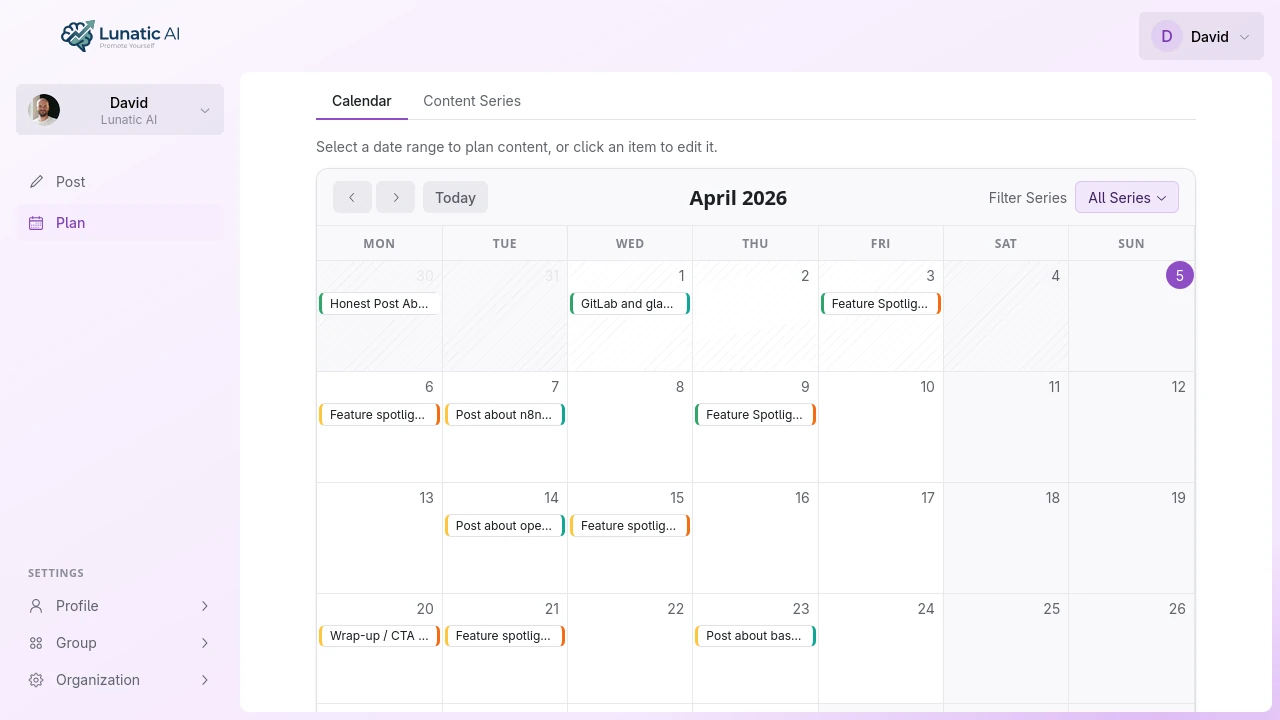 LinkedIn content calendar with themed content series
Content calendar with posts organized by content series
Frequently Asked Questions
Start building your content strategy
Voice profiles, content calendar, and series to keep you on track. Free plan available.
Start Planning